Your business requires regular cleaning scheduled according to risk factors, food processing capacity, allergen concerns, and regulatory checks, combined with verification documentation demonstrating food safety protocols, regulatory audits, and government health requirements. The following sections describe essential sanitation program components.
Essential Summary
- Brampton's food safety cleaning professionals provide services to restaurants, grocery departments, commissaries, warehouses, bakeries, schools, mobile vendors, and allergen-sensitive operations.
- They sanitize high-touch surfaces, food-contact equipment, kitchens, floors, drains, restrooms, and storage areas using sectional methods to prevent cross-contamination.
- Logging of finalization through checks, inspections, and action records confirms certified providers have verified proper chemical concentration, compatibility, and exposure duration.
- Hygiene timelines should adhere to threat, production volume, format changes, spills, and regulations, with routine, recurring, and seasonal activities distributed by location.
- Vendors should have hazard analysis knowledge, health regulatory competency, safety training training, insurance, references, colour-coded tools, and assessment-ready hygiene paperwork.
What Brampton Venues Require Food Safety Cleaning?
Brampton establishments that handle, store, prepare, package, or serve food require food safety cleaning. Implement it if your business is falls under public health inspections, food codes, or HACCP requirements. The requirement covers eateries, dining facilities, warehouses, supermarket areas, meat counters, fish departments, retail outlets, and institutional kitchens.
Compliant food safety cleaning is also required in warehouses, food manufacturing plants, cold storage sites, retail bakeries, school nutrition programs, banquet halls, and meal delivery hubs. Temporary and mobile businesses are included, like catering trucks, festival vendors, and pop-up food booths. Your facility requires written cleaning standards should your workers handle raw materials, divide prepared foods, warm meals, or maintain allergen storage. In Brampton, hygiene is not elective; it constitutes legal, operational, and consumer protection compliance.
Which Areas Do Brampton Cleaning Experts Cover?
You require experienced cleaning professionals who sanitize frequently touched areas, cooking areas, floor areas, and bathrooms to ensure compliance with food safety and health standards. These locations are prioritized due to their high cross-contamination potential, slip and fall dangers, and health code violations.
Knowing their service areas enables you to validate your facility's cleaning meets operational demands and regulatory compliance.
High-Touch Surface Disinfection
create a sterilization protocol
maintaining sequential systems, and keeping separate cleaning tools organized by zone
Kitchens, Floors, and Restrooms
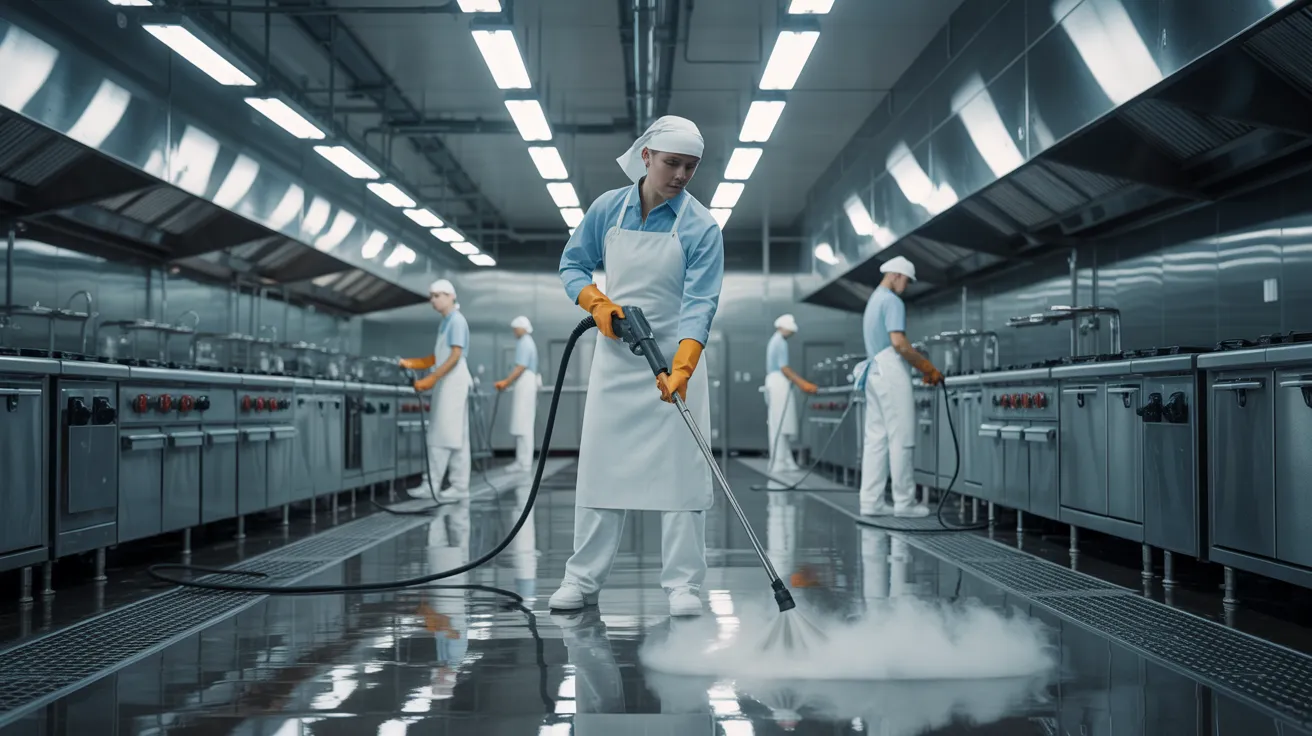
Brampton cleaning services focus on kitchens, floors, and restrooms as each zone presents different food safety, accident, and wellness risks. In industrial kitchens, you need grease removal from cooking stations, appliance surfaces, drain systems, preparation areas, and backsplashes to reduce bacterial growth and pest activity.
Professional floor care with documentation is also included. is also provided as part of the service.
Restroom sanitation involves disinfecting touchpoints, fixtures, partitions, dispensers, and waste containers, restocking supplies and controlling odours. They also service restaurant moprooms, where chemical storage, sink hygiene, and drainage conditions can affect sanitation compliance and staff safety daily.
Why Food Safety Cleaning Matters in Brampton
In Brampton, you must copyright food-safe cleaning standards to meet health code requirements and pass inspections. You also reduce cross-contamination by cleaning and sanitizing food-contact surfaces, equipment, and high-touch areas correctly. Most importantly, you help protect community wellness by reducing the chance of food poisoning in your establishment.
Food Safety Regulations
Food businesses in Brampton face stringent health requirements, making food safety cleaning critical to fulfilling health code requirements, safeguarding patrons, and sidestepping enforcement action. You must maintain hygienic food handling zones, documented cleaning schedules, appropriate product handling, and documented employee protocols that comply with municipal and provincial inspection expectations.
Detailed hygiene logs help you in establishing due diligence during official assessments and demonstrating your methods follow consistent patterns that are replicable and monitored.
Contamination Prevention
Following health code standards depends on your ability to prevent cross-contamination in routine food work and sanitation. You should isolate raw items from prepared foods, sanitize prep surfaces between tasks, and store chemicals away from food-contact items. Clear procedures reduce transfer risks and support consistent compliance during inspections.
Building allergen segregation prevents priority allergens from contacting shared surfaces, containers, or equipment. Leverage separate cutting boards, colored implements, and strict utensil labeling so team members won't blend products in cooking or serving.Mandate hand cleaning following uncooked meats, shellfish, egg items, or allergen substances. Swap wiping cloths regularly, and confirm sanitizer strength with test strips. When your team follows these practices each shift, you create a cleaner, safer operation that meets Brampton's food safety expectations consistently.
Community Health Safety
When food safety cleaning weaken, you don't only face inspection setbacks—you raise the likelihood of food contamination affecting customers, staff, and the larger Brampton community. You also weaken your role in safeguarding community wellness, especially in busy food facilities where pathogens travel quickly through surfaces, equipment, and touchpoints.
You need sanitation systems that remove contaminants, sanitize effectively, and validate outcomes. This involves maintaining contact periods, using authorized sanitizers, logging schedules, and educating staff to meet health-unit expectations. These controls promote pathogen control by minimizing pathogens before reaching surfaces or food. Throughout Brampton, effective sanitation protects vulnerable communities, reduces outbreak risk, and proves accountability. When you adhere to standards, you go beyond requirements—you lower hazards and enable safer food service throughout the area.
Why Is Cleaning Essential for Food Safety Compliance?
Thorough cleaning protocols strengthen food safety compliance by minimizing contamination hazards, controlling pathogen growth, and maintaining your facility's adherence to sanitation requirements under HACCP-based programs and public health regulations. You confirm that food-contact surfaces remain visibly clean and microbiologically controlled, backing documented preventive controls and inspection readiness.
Systematic cleaning further reinforces allergen mitigation by extracting residues that can trigger undeclared allergen exposure. When you combine established sanitation practices with safety training, your staff can adhere to uniform procedures, employ approved chemicals properly, fill out documentation thoroughly, and address discrepancies before escalation occurs. Regular cleaning enables traceability, validates remediation efforts, and demonstrates commitment in audits. Moreover, it supports you maintain product safety, maintain compliance standards, and reduce the chances of punitive measures, market recalls, customer complaints, and unnecessary health hazards.
Determining When to Arrange Commercial Cleaning
maximum production periods, product switches, spill events
Deep seasonal cleaning works best during shutdowns, weather-related soil buildup, or pest-pressure periods
Selecting the Right Brampton Cleaning Experts: Key Considerations
Begin by evaluating providers based on sanitation compliance standards—not solely on budget. You should confirm that each organization comprehends CFIA, public health, and HACCP-aligned expectations applicable to your facility. Request proof of insurance, WHMIS compliance, staff training documentation, and oversight procedures. Assess whether technicians recognize cross-contamination hazards, chemical handling protocols, and verifiable sanitation records.
You must also evaluate business consistency and oversight. Seek references from food facilities in Brampton, then assess response speed, corrective processes, and communication standards. Ensure the company enables supplier checks and can provide inspection-compliant records when authorities or third parties demand verification. Verify equipment is maintained, colour-coded tools are deployed correctly, and site-specific hazards are understood. A reputable service safeguards compliance, product safety, and your market standing.
What details should a Food Safety Cleaning Plan include?
Create a documented strategy that makes clear every sanitation responsibility, standard, and task before production begins. You should outline cleaning frequencies, approved chemicals, dilution rates, contact times, tools, and verification methods for each zone, surface, and piece of equipment. Include pre-operational inspections, corrective actions, and employee training requirements.
Your plan should also cover contamination prevention, garbage management, pest control procedures, and recorded timelines for bathrooms, drainage systems, surfaces, and food-preparation zones. Explain how you'll separate raw and ready-to-eat processes, support ingredient tracking, and maintain accurate allergen labeling through validated cleaning between product changes. You should designate accountability, maintain signed records, and compare results against regulatory standards, HACCP controls, and customer requirements. When gaps appear, revise procedures immediately and retrain staff.
Popular Asked Inquiries
Will cleaning services manage nighttime hours at Brampton properties?
If you manage regulated spaces, you'll also need relevant article documentation that support audits and maintain assurance.
Are emergency spill response solutions provided from Brampton cleaning experts?
Yes, you can locate several Brampton cleaning professionals offering emergency response options. They handle contamination, evaluate risks, isolate zones, and perform swift decontamination to reduce exposure and prevent disruption. You should confirm timeframes, training credentials, protocols, and disposal methods. If your facility needs compliance, choose a service that logs events, maintains standards, and ensures verification.
Can plant-based disinfectants be applied securely on food-contact surfaces?
Yes, green disinfectants can be suitable for food-handling equipment if you choose products labeled food safe and meeting regulatory standards. You should verify contact times, mixing proportions, and rinse protocols before application. Many botanical formulations minimize harsh chemical exposure, but you require confirmation of performance against specific pathogens. To keep surfaces residue-free, you must adhere to exact manufacturer guidelines and ensure the cleaning agent satisfies food industry regulations.
Will cleaning plans accommodate seasonal production changes?
Without question, sanitation programs adjust easily for seasonal production changes. Adapt frequencies, personnel, chemicals, and validation steps to align with seasonal workflows while upholding compliance standards. Minimize operational delays by planning cleaning around equipment transitions, high demand periods, and usage cycles. Further modify SSOPs, training, and facility monitoring to address temporary risks, novel allergens, or increased soiling. Consistent reviews preserve your schedule effective.
Will professional cleaning services train your staff on hygiene best practices?
Indeed, commercial cleaning providers often offer staff training on proper hygiene. Your staff obtains instruction on proper chemical use, contact times, preventing cross-contamination, equipment disassembly, and documentation. They generally adhere to instruction with HACCP, GMP, and CFIA or local public health requirements. Many also execute sanitation audits to verify compliance, reveal issues, and reinforce corrective actions. This supports you in maintain consistent procedures, achieve compliance, and decrease foodborne illness risks each day.
Conclusion
When you work with Brampton commercial cleaning and food safety specialists, you aren't merely cleaning—you keep your operation inspection-ready and your standards compliant. From processing areas to kitchen spaces, every clean surface and maintained area minimizes unwelcome guests and prevent costly setbacks. By scheduling service at the right intervals and following a clear cleaning plan, you safeguard staff, customers, and your brand image. In a tightly regulated environment, sanitary conditions aren't optional—they're fundamental to proper operations.